
Our Heritage
A brief look at the history, culture, and community behind one of the world's oldest continuous civilizations.
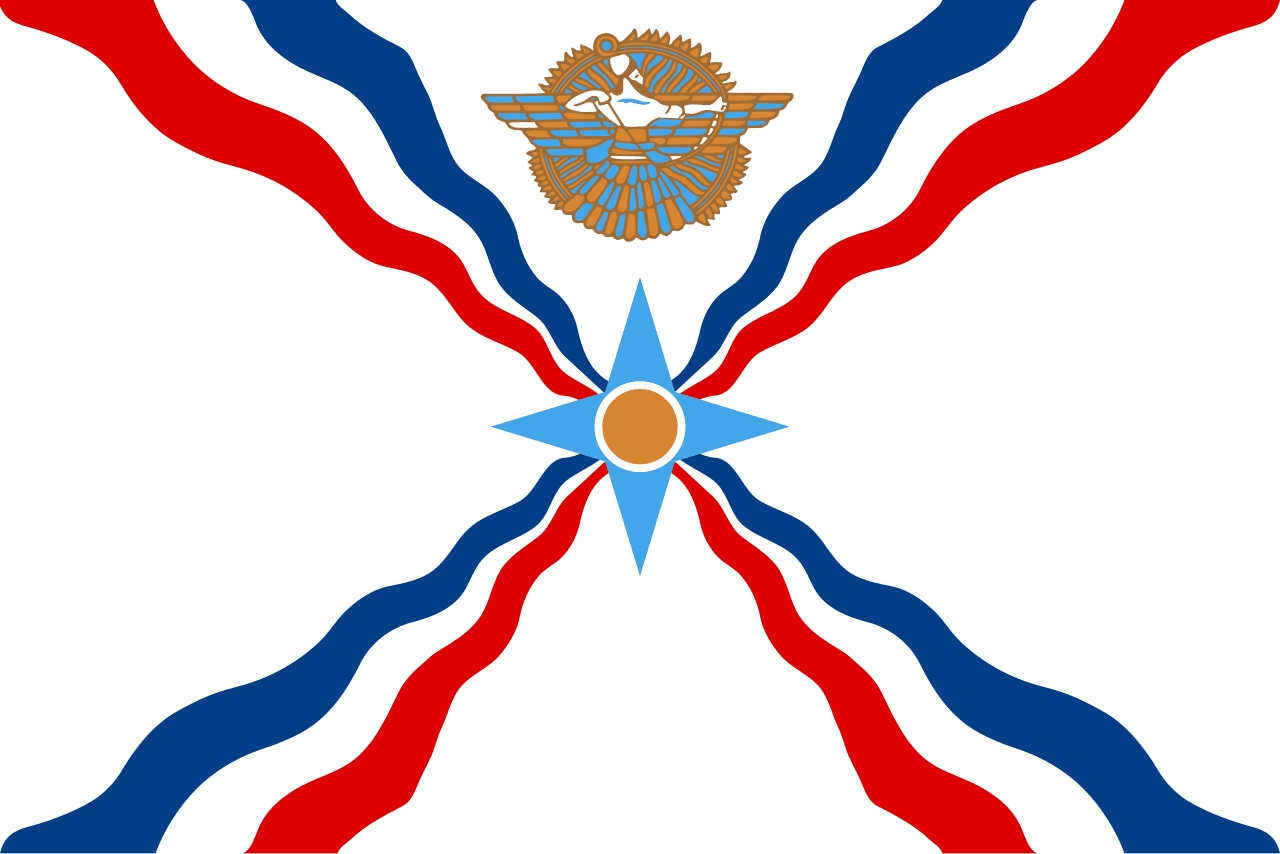
Quick Facts
- Native Language
- Assyrian/Aramaic
- Religion
- Christianity (various denominations)
- Population
- 3–5 million worldwide
- Historic Region
- Mesopotamia (Iraq, Syria, Turkey, Iran)
- Ancient Capital
- Nineveh (near modern Mosul, Iraq)
- New Year (Kha b-Nisan)
- April 1st
Who Are Assyrians?
Assyrians are an indigenous ethnic group native to Mesopotamia (modern-day Iraq, Syria, Turkey, and Iran). We are one of the world's oldest continuous civilizations, with a rich history spanning over 6,700 years.
Today, Assyrians are a diaspora community spread across the globe, with significant populations in the United States, Europe, Australia, and the Middle East. Despite geographical separation, we maintain strong ties to our heritage, language, and Christian faith.
Language & Culture
Assyrian/Aramaic is our native language — a Semitic language that was the lingua franca of the ancient Near East. Today, various dialects exist, including Assyrian Neo-Aramaic and Chaldean Neo-Aramaic.
Our culture is deeply rooted in family values, hospitality, and community. Traditional music (including the zurna and tabla), folk dancing (khigga), and cuisine (dolma, biryani, kubba) are cherished parts of our heritage.
Christian faith is central to Assyrian identity, with most belonging to ancient Eastern Christian denominations including the Assyrian Church of the East, Chaldean Catholic Church, and Syriac Orthodox Church.
Assyrian Churches
Christianity has been central to Assyrian identity for nearly two millennia. Assyrians were among the first peoples to embrace Christianity, and today the community is represented by several historic denominations:
Despite denominational differences, Assyrians across all churches share a common ethnic identity, language, and cultural heritage. The Aramaic language — the language spoken by Jesus — remains a living thread connecting all Assyrian Christian traditions.
Ancient Heritage
~2500 BC — Early Assyria
The city-state of Ashur emerged as a major trading center on the Tigris River. Early Assyrians established extensive trade networks stretching from Anatolia to the Persian Gulf, laying the foundation for one of history's greatest civilizations.
900–600 BC — Neo-Assyrian Empire
The Assyrian Empire reached its zenith as one of the most powerful civilizations of the ancient world. Our ancestors built magnificent cities like Nineveh, Ashur, and Nimrud, and made groundbreaking contributions to mathematics, astronomy, architecture, and literature.
~668 BC — Library of Ashurbanipal
The famous Library of Ashurbanipal in Nineveh housed over 30,000 clay tablets, preserving knowledge from across the ancient world — including the Epic of Gilgamesh. Assyrian innovations in irrigation, urban planning, and governance influenced civilizations for centuries.
1st Century AD — Adoption of Christianity
Assyrians were among the earliest peoples to adopt Christianity, with tradition holding that the Apostles Thomas, Thaddeus, and Bartholomew brought the faith to Mesopotamia. The Church of the East became one of the world's most widespread Christian traditions, reaching as far as China and India.
Seyfo — 1914–1920
During World War I, Assyrians suffered the Seyfo (Assyrian Genocide), in which an estimated 250,000–750,000 Assyrians were killed alongside other Christian minorities in the Ottoman Empire. This tragedy triggered the first major wave of diaspora migration.
20th–21st Century — Global Diaspora
Successive conflicts — including the Simele massacre (1933), the Ba'athist campaigns in Iraq, and the rise of ISIS (2014) — drove further displacement. Despite these challenges, Assyrians have built thriving communities worldwide while maintaining their distinct identity.
Assyrians Today
Assyrians today are a vibrant, global community with strong cultural and linguistic ties. Major communities thrive in:
- United States
- Turlock, San Diego, Chicago, Detroit
- Europe
- Sweden, Germany, Netherlands
- Australia
- Sydney, Melbourne
- Middle East
- Iraq, Syria, Iran, Lebanon
Assyrians have achieved success across medicine, business, academia, arts, and athletics. We celebrate our heritage through cultural festivals, language schools, and community organizations that keep our traditions alive for future generations.
Traditions & Celebrations
Kha b-Nisan (Assyrian New Year)
Celebrated on April 1st, Kha b-Nisan marks the beginning of the Assyrian calendar year, now over 6,770 years old. Communities gather for parades, traditional music, and cultural performances. It is a celebration of resilience and renewal.
Shahra d-Soma (Lent) & Easter
As one of the earliest Christian communities, Assyrians observe a rigorous 50-day Lenten fast. Easter is the most important religious celebration, with families gathering for special church services and festive meals.
Assyrian Martyrs Day (August 7th)
A solemn day of remembrance honoring the victims of the Simele massacre of 1933 and all Assyrians who have suffered persecution. Communities hold memorial services and educational events.
Weddings & Family Gatherings
Assyrian weddings are multi-day celebrations featuring the khigga (line dance), live zurna and tabla music, and traditional customs like the groom's family procession. Family is the cornerstone of Assyrian culture, and gatherings strengthen the bonds across generations.
Music, Art & Cuisine
Assyrian culture is rich in artistic expression that has been passed down through generations, blending ancient traditions with modern creativity.
Music
Traditional Assyrian music features the zurna (double-reed wind instrument) and tabla (drum), which accompany folk dances like the khigga and sheikhani. Modern Assyrian artists blend these traditions with contemporary genres, keeping the culture vibrant for younger generations.
Cuisine
Assyrian cuisine reflects Mesopotamian heritage — dolma (stuffed grape leaves), kubba (bulgur dumplings), biryani, harissa (wheat and meat porridge), and booshala (yogurt soup) are beloved staples. Meals are communal events that bring families and neighbors together.
Art & Architecture
From the iconic lamassu (winged bull) sculptures of ancient Nineveh to intricate Syriac calligraphy and textile weaving, Assyrian art reflects thousands of years of creative tradition. Today, contemporary Assyrian artists draw on this heritage to explore themes of identity, diaspora, and resilience.
Contributions to Civilization
Ancient Assyrians made foundational contributions that shaped the course of human civilization:
- Writing & Libraries — Cuneiform tablets and the Library of Ashurbanipal preserved humanity's earliest recorded knowledge
- Astronomy & Mathematics — Division of the circle into 360 degrees, early star catalogs, and lunar calendars originated in Mesopotamia
- Engineering — Advanced aqueduct systems, including the earliest known engineered canal at Jerwan, which carried water over 50 miles to Nineveh
- Governance — One of the first empires to use a postal system, provincial administration, and standardized laws across a vast territory
- Medicine — Assyrian texts describe hundreds of medicinal plants and early surgical procedures, forming some of the earliest medical literature
Resources & Organizations
Assyrian International News Agency (opens in new tab)
News and information about the Assyrian community worldwide
Assyrian Policy Institute (opens in new tab)
Research and policy advocacy for Assyrian rights
Seyfo Center (opens in new tab)
Research and awareness of the Assyrian Genocide
Assyrian Aid Society (opens in new tab)
Humanitarian support for Assyrians in the homeland
Assyrian Foundation of America (opens in new tab)
Cultural preservation and community support in the US
British Museum — Introducing Assyrians (opens in new tab)
The British Museum's introduction to Assyrian history and artifacts
The Metropolitan Museum of Art — Assyrian Sculpture Court (opens in new tab)
Essay on the Met's collection of monumental Assyrian sculpture
Louvre — The Palace of Sargon II (opens in new tab)
Explore the reconstructed palace of the Assyrian king Sargon II
Britannica — Assyria (opens in new tab)
Comprehensive encyclopedic overview of Assyrian civilization
Carry the Legacy Forward
Connect with someone who shares your heritage and values.
Get Started